The new upmarket saloon is scheduled to go on sale in 2022 and will compete directly with theTesla Model S in terms of price. Details of the EQE have been cited in documents recently made public by the Chinese Ministry of Information and Technology in which the EQE is referred to under its internal codename, V295. The EQE is one of 10 new electric models destined for sale from Mercedes under its EQ sub-brand by the end of 2025 in a development programme already budgeted to cost up to €10 billion (£8.7bn). On top of this, the German car maker has announced the investment of a further €20bn (£17.4bn) in battery cell technology. Electric models are expected to account for more than a quarter of all Mercedes’ sales by the middle of the next decade. Zetsche said: “Our electric offensive continues to gain momentum.We are now taking the next step.” The EQE will follow the recently introduced EQC, next year’s new EQA and EQV, the flagship EQS and the recently confirmed EQB into Mercedes showrooms in the UK.
A sibling model to the larger and more luxurious EQS due out in 2021, the EQE will also be the second Mercedes to be based on the company’s new MEA electric car platform. Set to make extensive use of aluminium, it is designed to give future EQ electric models a flat floor structure for added packaging flexibility and what Mercedes insiders have described as “class-leading interior space”. One source said: “The EQE will be shorter in length than today’s E-Class but offer space comparable to the existing S-Class.”
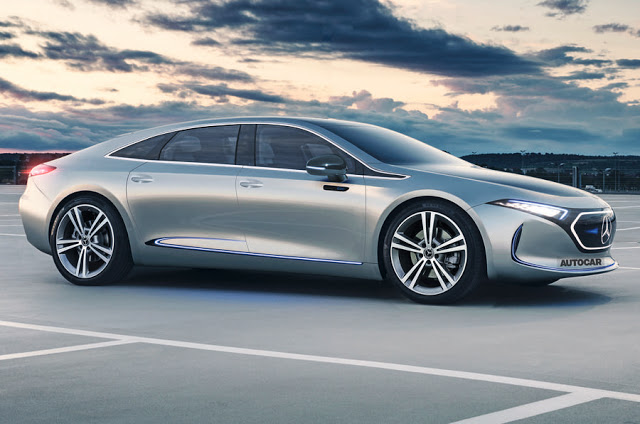
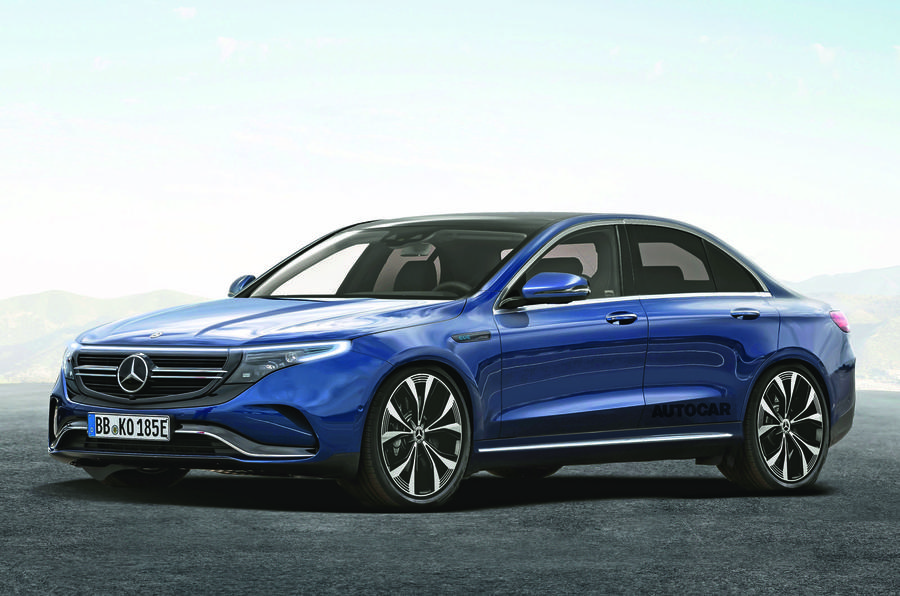
As our image shows, the EQE will evolve the shape of the upcoming facelifted E-Class with a focus on aerodynamic efficiency. It will adopt a face inspired by the rest of the EQ line-up, and is expected to sit lower to the ground with a ride height adjusting depending on the road conditions.
Luxury means different things to different parts of the country, especially when it comes to cars. On the West Coast, luxury-car buyers are increasingly going electric. In the Northeast, you’re far more likely to see luxury SUVs. But in the Midwest, where I spent a few days driving a 2019 Lincoln NautilusBlack Label around Southeastern Missouri, Lincoln and Cadillac are still king. With Lincoln striving to appeal to those outside the heartland, here’s what the Nautilus Black Label gets right and wrong.
GREAT FIRST IMPRESSIONS
One of Lincoln’s smartest moves of the past few years was deciding to give its models real names. Formerly known as the MKX, the new Nautilus and its updated sheetmetal turned heads and drew bystanders with regularity across eastern Missouri. “What is that?’ “THAT’s a Lincoln?” “Nautilus?” Rebranding to the Nautilus name was truly a stroke of genius. Even if it’s a name that some struggle to pronounce, a real name resonates with actual real human beings far better than three random letters ever could.
DRIVES WELL WITHOUT BEING IN-AUTHENTICALLY SPORTY
The Nautilus Black Label is available with a 250-hp 2.0-liter turbo-four, or with a 2.7-liter twin-turbo V-6 with 335 hp and 380 lb-ft of torque, as found in our tester. Both engines are paired with an eight-speed automatic and available with all-wheel drive.
With Lincoln leaving the sport-luxury stuff to Cadillac in order to focus on what it calls “quiet” luxury, the Nautilus is a capable performer without being an outright performance SUV. Its twin-turbo V-6 is torquey and responsive around town, with smooth power delivery that never quite pins you back in your seat. On the highway, the Nautilus feels quick to accelerate, but disguises speed well.
Even on its gorgeous 21-inch wheels shod with all-season tires, the Nautilus both rides and handles nicely for what it is; some credit is due to its well-tuned electronically adjustable suspension. Steering feel and response falls somewhere between the Lexus RX and Acura MDX on the steering sportiness scale.
THE BLACK LABEL-EXCLUSIVE APPOINTMENTS ARE PROPERLY LUXURIOUS…
As is the case on the Lincoln Continental, Navigator, and now Aviator, opting for the top-level Black Label trim brings some truly luxurious finishings to the Nautilus’ cabin. The Nautilus Black Label’s “Venetian” leather, available in three different color schemes, is thick, soft, and features quality-looking stitching. The cabin also features a suede-like headliner, thick double-paned glass to quiet the cabin, and a 19-speaker Revel Ultima audio system with phenomenal audio clarity and definition. Twenty-two-way front seats are available for $1,500, though they are nowhere near as comfortable as the 30-way seats in newer Lincolns.
BUT…
Unlike the latest batch of new Lincolns, the Nautilus retains some vestiges of old alphabet-soup Lincoln in its DNA. For example, while Black Label models such as the Navigator are beautifully finished throughout, incorporating woodgrains, metals, and large high-resolution screens, the Nautilus is missing that attention to detail. It still has the same black grained plastic “waterfall” center stack as the MKX, complete with an 8.0-inch infotainment system that, while functional, is a generation behind Lincoln’s latest products.
As a result, the Nautilus is ultimately a less convincing Black Label model than either the Continental or the Navigator. Those two (and by all accounts, the coming Aviator) are thoroughbred top-to-bottom luxury cruisers. The Nautilus Black Label, especially at $67,630 as tested, is missing that X-factor that ultimately distinguishes the Continental and Navigator from the pack.
Following rumors almost as old as the Corvette nameplate itself, it’s official: The 2020 Corvette Stingray has its engine mounted in the middle. There’s an ocean of news from the reveal , but there’s one bit of information that really raised our eyebrows. Despite the massive leap forward in design and driving dynamics, the mid-engine C8 Corvette will still start at less than $60,000.
We hear you—$60,000 is not a small amount of money. But for a mid-engine supercar with 495 naturally aspirated V-8 horses and a 0-60 time under 3.0 seconds? It’s an absolute bargain. We still don’t have exact pricing for the 2020 Corvette, but to put its sub-$60K starting price into perspective, here’s a list of 10 cars that will run you more than a base C8.
Alfa Romeo 4C Spider: $68,745
There’s something to be said for the Alfa Romeo 4C. It was the first U.S.-bound Alfa in a generation when it made its debut in 2014, and its buzzy engine and stiff carbon chassis impressed us in our First Drive. It weighs almost nothing, it looks like a supercar, and its lack of power steering really stands out next to its power-assisted competition. That said, the 4C’s interior is loud, cramped, and cheap. That the 4C starts at almost $70,000 is wild to us, especially considering the new ‘Vette has more than twice the power and enough creature comforts to make it a livable daily driver.
Audi TT RS: $67,895
The Audi TT is on its way out, but it’s certainly going out with a bang. In TT RS trim, it’s powered by a 2.5-liter turbocharged five-cylinder engine that pays homage to the Audi five-cylinder rally cars of the 1980s. It’s all-wheel drive, sounds the business, and launches itself to 60 mph in a scant 3.6 seconds. Compared to the C8 Corvette, though, the $68,000 Audi is priced a little steep. The C8 is quicker and significantly more powerful, plus its mid-engine, rear-drive layout means it should handle worlds better than the front-drive-based Audi. Perhaps it’s best that the TT won’t be competing for market space with the 2020 Corvette.
BMW M4: $70,145
BMW’s latest attempt at living up to its Ultimate Driving Machine claims doesn’t feel quite as special as previous iterations. The M4 is a quick, powerful, capable car, but as we mentioned in a comparison test against the Camaro SS, “What’s missing is any trace of that special sauce that used to make BMWs worth the additional price: tuning.” With its twin-turbocharged inline-six and plush interior, the M4 isn’t a bad choice if you’re looking for a luxurious sport coupe. But for $10,000 less, you could have a mid-engine V-8 sports car.
BMW Z4 sDrive M40i: $64,695
The new BMW Z4 is a fabulous roadster in its own right—especially the M40i with its 382-hp turbo inline-six under the hood. Our First Drive found the Z4 to be a composed, refined car with lots of mechanical grip and an excellent top-down driving experience. At $65,000, though, some might find it hard to justify the price difference over a C8 Corvette. Plus, the ‘Vette has a standard removable roof panel for open-top motoring and a naturally aspirated (and more powerful) V-8 engine providing the soundtrack.
Ford Mustang Shelby GT350: $60,235
The GT350 and GT350R just might be the best Mustangs ever built. Their high-revving flat-plane-crank V-8 makes 526 hp and a sound you just don’t hear from other American powerplants. The GT350 is, however, still a Mustang, which means it’s heavy—about 3,800 pounds. Chevy says the Corvette has a dry weight of 3,366 pounds, and because it’s mid-engine, that weight should naturally be better distributed. It’s unclear whether the C8 will still come in below $60,000 after destination charge is factored in, but even if the 2020 Corvette is a hair over the Shelby’s price, it’ll be hard to argue that the GT350 is the better performance deal.
Jaguar F-Type: $62,625
It’s hard not to love the Jaguar F-Type. I mean, just look at it. Since its debut in 2014, Jaguar has done a lot of work to expand the F-Type lineup, at the top of which sits the 575-hp animal that is the F-Type SVR. Problem is, even the entry-level four-cylinder F-Type starts at more than $62K. In four-cylinder guise the F-Type is still a sweetheart, but many will find it difficult to justify when, for less cash, you could get a mid-engine Corvette with a couple hundred extra horses and a naturally aspirated V-8 right behind your head.
Lexus RC F: $66,800
Beside the Mustang, the Lexus RC F is one of only two naturally aspirated V-8-powered cars on this list. You might not be in love with its styling, but we have no complaints with what’s under the hood. However, even more so than the GT350, the RC F is something of a porker. Its platform is a mashup of no less than three Lexus models, slapped together to achieve structural rigidity at low cost, but the result is a car that weighs more than 4,000 pounds. The RC F is a compelling alternative to a car like the M4, but it’s hard to make an argument for the $67,000 Lexus when the lighter, more powerful Corvette starts at less than $60K.
Mercedes-AMG SLC 43: $63,900
No direct successor is planned for the Mercedes-Benz SLC, and we’re sad to see another two-seat roadster going the way of the dinosaur. In AMG SLC 43 guise, the little Benz makes 385 hp and hits 60 mph in an estimated 4.6 seconds, but its 8-year-old platform is starting to show its age. There’s certainly a market for rear-drive, open-top performance cars, but it’s difficult to recommend the SLC 43 in a world where the Mazda Miata exists, let alone a mid-engine V-8-powered Corvette (with a standard removable roof panel) under $60K.
Porsche 718 Cayman S: $70,550
It’s safe to say that our biggest disappointment with the Porsche 718 Cayman and Boxster lies in the engine compartment. All models (save the Cayman GT4 and Boxster Spyder) are powered by a turbocharged horizontally opposed four-cylinder, replacing the naturally aspirated flat-six engines that used to power Porsche’s mid-engine sports cars. The Cayman and Boxster still set a handling benchmark and their angry four-pots make these cars more capable and more efficient than ever, but they lack the aural excitement that made us fall for their predecessors. Perhaps the C8 Corvette can scratch that naturally aspirated mid-engine sports car itch, and if it can, it’ll do so with a $10,000 price advantage over a Cayman S.
Honorable mention: Toyota Land Cruiser: $86,460
We can’t imagine anyone will be cross-shopping a mid-engine Corvette and a Toyota Land Cruiser, but did you know that Toyota sells an $86,000 SUV? That’s right, the automaker known for cheap, reliable transportation machines sells a five-seat truck for almost as much as a new Porsche 911. It’s expensive because the Land Cruiser is borderline unstoppable off-road—it recently took first place in an off-road comparison test against a Jeep Wrangler and Mercedes G-Wagen—but it still manages to offer comfort and luxury when driving on pavement. But still! You can buy a V-8 mid-engine supercar for less than a Toyota!
First Half 2019: Germany was the largest car market in Europe followed by the UK, France, Italy and Spain. The overall market contracted by 3%.
January to June 2019: New passenger vehicle registrations in the European Union (EU) and EFTA countries contracted by 3.1% to 8,183,562 cars. The German new car market had its best first semester ever with car sales up by 0.5% to extend its leading position as Europe’s largest new car market. The other top five European new car markets all contracted but the size order remained unchanged with Britain still the second largest car market in Europe followed by France, Italy and Spain.
European New Car Market in 2019 (First Half)
During the first half year 2019, new passenger vehicle registrations in the European Union (EU) were 3.1% lower at 8,183,562 cars – around 266,000 fewer than were sold in the EU during the first semester of 2018.
New passenger vehicle registrations in the EU and EFTA combined were similarly 3.1% lower at 8,426,190 cars.
Although the European new car market contracted by 3.1% during the first half of 2019, car sales remained near record levels. The first semester of 2018 had the highest car sales in Europe this century and the first half of 2019 was the third consecutive year that car sales in the EU exceeded eight million vehicles during the first six months of the year.
Car Sales per EU and EFTA Country in 2019 (Half Year)
New passenger vehicle registrations per EU and EFTA country during the first six months of 2019 were as follows according to the ACEA:
Car Sales in European Countries in 2019 (First Half)
Car sales in most European countries were lower during the first half of 2019 with the noticeable exception of Germany and Poland. Germany remained the largest single country car market in Europe and sales expanded by 0.5% to a new strongest first semester record. In effect, the German new car market was only 10,000 cars bigger than during the first six months of 2018.
The UK remained the second largest new car market in Europe at the start of 2019 despite a 3.4% contraction. Uncertainty caused by Brexit and future emission regulations contributed to the decline in new car sales but in Italy and Spain the contraction was even stronger. France was the third largest new car market thus far in 2019 with the market down by 1.8%.
Poland (+1.9%) was, apart from Germany, the only of the ten largest new car markets in Europe with an expanding market. The Swedish new car market contracted by a quarter and the Dutch market by a tenth.
The weakest car markets in Europe during the first semester of 2019 were Iceland (-38.7%) and Sweden (-25.6%). The fastest growing markets were Lithuania (+47.1%) and Romania (+19.2%). Romania also added the highest number of extra cars – more than 11,000 more than during the first half of 2018.
During the first half of 2019, Volkswagen and PSA remained the largest carmakers in Europe, VW and Renault the top-selling brands and the Golf the best-selling model.
January to June 2019: VW and PSA were again the best-selling car manufacturers in Europe with Volkswagen and Renault the largest car brands. Peugeot moved ahead of Ford. The VW Golf and Renault Clio were again Europe’s favorite car models.
New passenger vehicle registrations in the European Union (EU) and EFTA countries contracted by 3.1% to 8,426,190 cars during the first half of 2019.
Best-Selling Car Manufacturers in Europe in 2019 (Half Year)
New passenger vehicle registration data released by the ACEA showed the following as the top carmakers and best-selling car brands in the EU and EFTA during the first six months of 2019:
Others2 include Bentley, Lamborghini and Bugatti, Others3 Includes Dodge and Maserati
Best-Selling Carmakers in Europe in 2019 (First Half)
It was mostly red numbers for the largest carmakers in Europe during the first half of 2019. The overall market contracted by 3.1% but remained near record levels and exceeded more than 8 million units for the fourth consecutive year for the EU and EFTA and third consecutive year for the EU.
Despite underperforming the broader market, the VW Group remained by far the largest car manufacturer in Europe with a market share just shy of a quarter. Volkswagen, Audi and Porsche all lost market share while Seat was the only major brand in the group to increase sales thus far in 2019.
The French PSA and Renault groups both gained market share with sales down by just over a percentage point. Flat sales were good enough to move the Hyundai Group ahead of both FCA and Ford. The BMW and Daimler groups both gained market share with sales only slightly weaker.
The Toyota Group and Volvo were the only major carmakers with stronger sales in Europe during the first half of 2019 while Nissan was the worst performer.
Best-Selling Car Brands in Europe in 2019 (First Semester)
The 20 best-selling car brands in Europe during the first half of 2019 were as follows:
Top-Selling Car Brands in Europe in 2019 (Half Year)
The 11 best-selling car brands in Europe during the first semester of 2019 all had weaker sales than during the first half of 2018.
Volkswagen remained by far the best-selling car marque in Europe despite sales slipping by 6.5% to below the million-units mark. Second placed Renault similarly had sales down by 6.5%.
Peugeot gained one rank position and market share with sales down by 3% while Ford slipped to fourth with sales down by 7.8% – the worst performance amongst the top-ten brands. Opel / Vauxhall sales were down 4.1%
Mercedes Benz and BMW both gained market share with BMW moving ahead of Audi. Skoda and Toyota gained market share with sales only down moderately.
Fiat slipped out of the top ten with sales down by a tenth. Only Nissan performed worse with sales down by nearly a quarter.
Dacia, Citroën and Seat were the most improved top 20 brands in Europe thus far in 2019.
The VW Golf and Renault Clio remained the favorite two car models of European buyers – both models are due for major updates towards the end of 2019.
June 2019: Brazil was the only major car market to expand with car sales lower in the USA, Russia, Japan, China, Europe and India.
January to June 2019: During the first half year of 2019, car sales were lower in all major car markets in the world with the exception of Brazil where sales increased by 11%. The Japanese car market was flat while the US and Russian markets contracted by around 2%. In the European Union new passenger vehicle registrations were down by 3% but remained at relatively high levels. In India, new car sales during the first six months of 2019 were down by a tenth while China remained the world’s largest new car market despite a 14% contraction.
Car Sales Worldwide in 2019 (Half Year)
New light and passenger vehicle registrations in various major markets in the world monitored by the VDA were as follows in June 2019 and the first half year of 2019:
Continued Expansion of the Brazilian Car Market in 2019 (First Half)
Light vehicle registrations in Brazil increased by nearly a tenth in June 2019 – the only major new car market in the world to have expanded in June 2019.
Brazil is similarly the only major car market in the world with growth during the first half of 2019. New light vehicle sales in Brazil increased by 11% during the first semester of 2019.
Japan – Flat Car Sales in 2019 (Half Year)
New passenger vehicle registrations in Japan were flat during the first half of 2019 with a minor 0.3% contraction to 2,285,700 cars.
In June 2019, the Japanese new car market was 2.2% lower than a year ago with 367,000 sales.
USA – Weaker Car Sales in 2019 (First Semester)
Light vehicle sales in the USA contracted by 1.9% in both June 2019 and the first six months of the year. In June, the US market was slightly bigger than that of the European Union with 1.514,900 cars sold while for the first semester the US market with 8,412,900 was only slightly smaller. As before, the light truck sector expanded by 1% while traditional passenger car sales contracted by 9%.
Russia – Weaker Car Sales in 2019 (Half Year)
Light truck sales in Russia were 3.3% weaker in June 2019 compared to the same month in 2018. During the first six months of 2019, the Russian market contracted slightly by 2.4% to 828,800 vehicles.
Europe – Weak Car Sales in June 2019
New passenger vehicle registrations in the EU and EFTA were down by 8% in June 2019. The contraction was partly due to two fewer working days in June 2019 compared to 2018 in many European countries.
During the first half of 2019, the EU new car market contracted by 3.1% but remained near historic highs. Germany had its best first semester ever with car registrations up by 0.5% but all other major market contracted with France down 1.8%, Britain 3.4%, Italy down 3.5% and Spain down 5.7%.
India – Weak Car Sales in June 2019
The Indian new car market contracted sharply in June 2019 with sales 17.5% lower than in June 2018. The lower numbers were partly due to high numbers a year ago.
Thus far in 2019, the Indian new car market was a tenth weaker than a year ago.
China – Weak Car Sales in 2019 (Half Year)
China remained by far the largest single-country car market in the world despite sales contracting by 7.1% in June 2019 and 14% during the first half of 2019. The Chinese new car market was heavily influenced by uncertainty over import tariffs with the USA. In May 2019, the VDA revised its forecast for the Chinese new car market in full year 2019 downwards from flat to -4%.
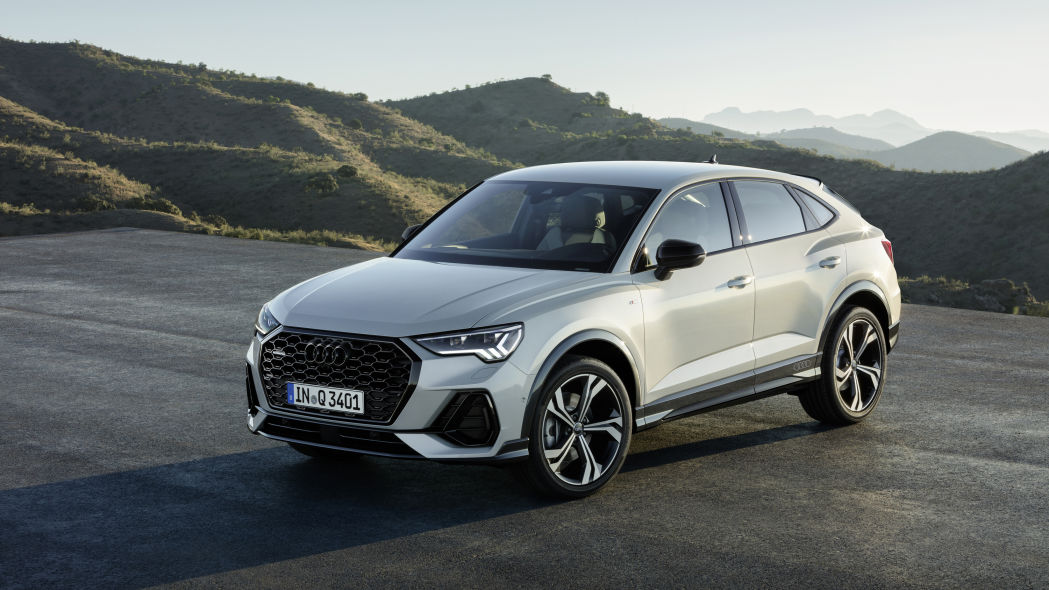
After Audi created the Q8 to stand in as a Q7 Sportback, the Ingolstadt carmaker worked the same alchemy at the other end of the crossover range with the Q3 Sportback. Modelers’ hands have massaged the Q3’s traditional, conservative form into the sloped roof and raked tailgate expected of a crossover coupe. The changes add a little more than half an inch to the length, lower the roof height by a little more than an inch, and make the Q3 Sportback a quarter-inch narrower than the standard version. According to the specs we’ve been given, cargo volume loses five cubic feet with the rear seats up, but unexpectedly gains 1.4 cubic feet with the rear bench down.
A few subtler exterior design tweaks separate the siblings. Much of the shiny trim on the Q3, such as around the singleframe grille and highlighting the front intakes, has been traded for gloss black. The shoulder line descends a touch, sliding through the door handles on the Q3 Sportback instead of connecting the fender-arch lines. Punchier rear haunches wrap around into a slightly different tailgate, and the blacked-out lower bumper emphasizes the much more aggressive diffuser. Eighteen-inch wheels will come standard, with 19- and 20-inch options from Audi Sport also available. The interior is the same as the regular Q3, save for the shape-shifted rear area. At launch in Europe, two Edition One models in either Dew Silver or Mythos Black will tweak the exterior styling with “dark decorative panels,” and add new materials and trim pieces in the cabin.
Two engines constitute the lineup to start. The Q3 Sportback 45 TFSI Quattro S tronic uses a turbocharged 2.0-liter four-cylinder that makes 226 horsepower. The Q3 Sportback 35 TDI S tronic fits a turbocharged 2.0-liter diesel four-cylinder with 147 hp without Audi’s Quattro all-wheel drive, that same engine rebranded as the 40 TDI S tronic when optioned with Quattro, getting 187 hp. Down the pike, buyers will get to choose a turbocharged 1.5-liter four-cylinder gas motor with 147 hp, aided by a 48-volt mild-hybrid system for better fuel economy. All available engines get hooked to a seven-speed S tronic dual-clutch transmission.
Audi hasn’t declared we’ll get the model yet, but with German competitors like the BMW X2 and Mercedes GLA and GLB either here or on the way, we expect the Q3 Sportback to join the party.
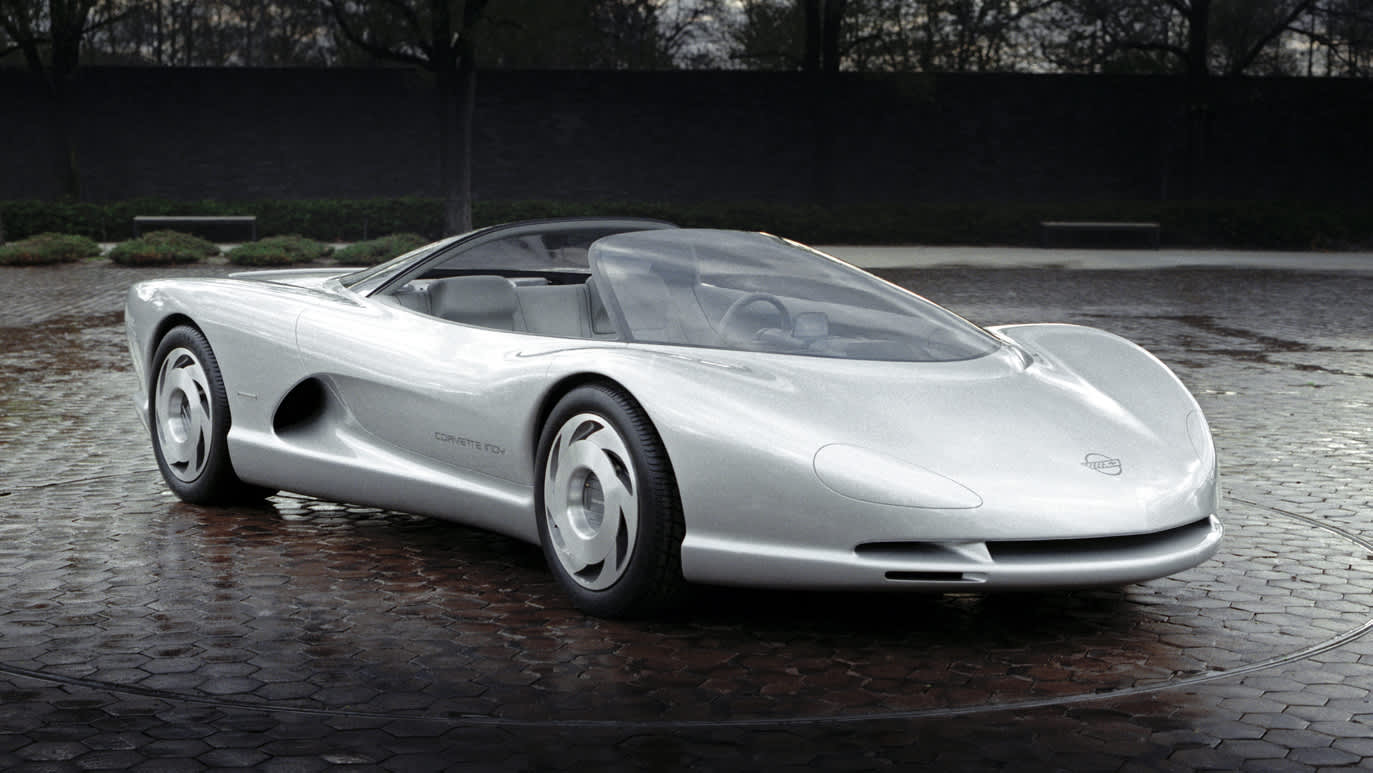
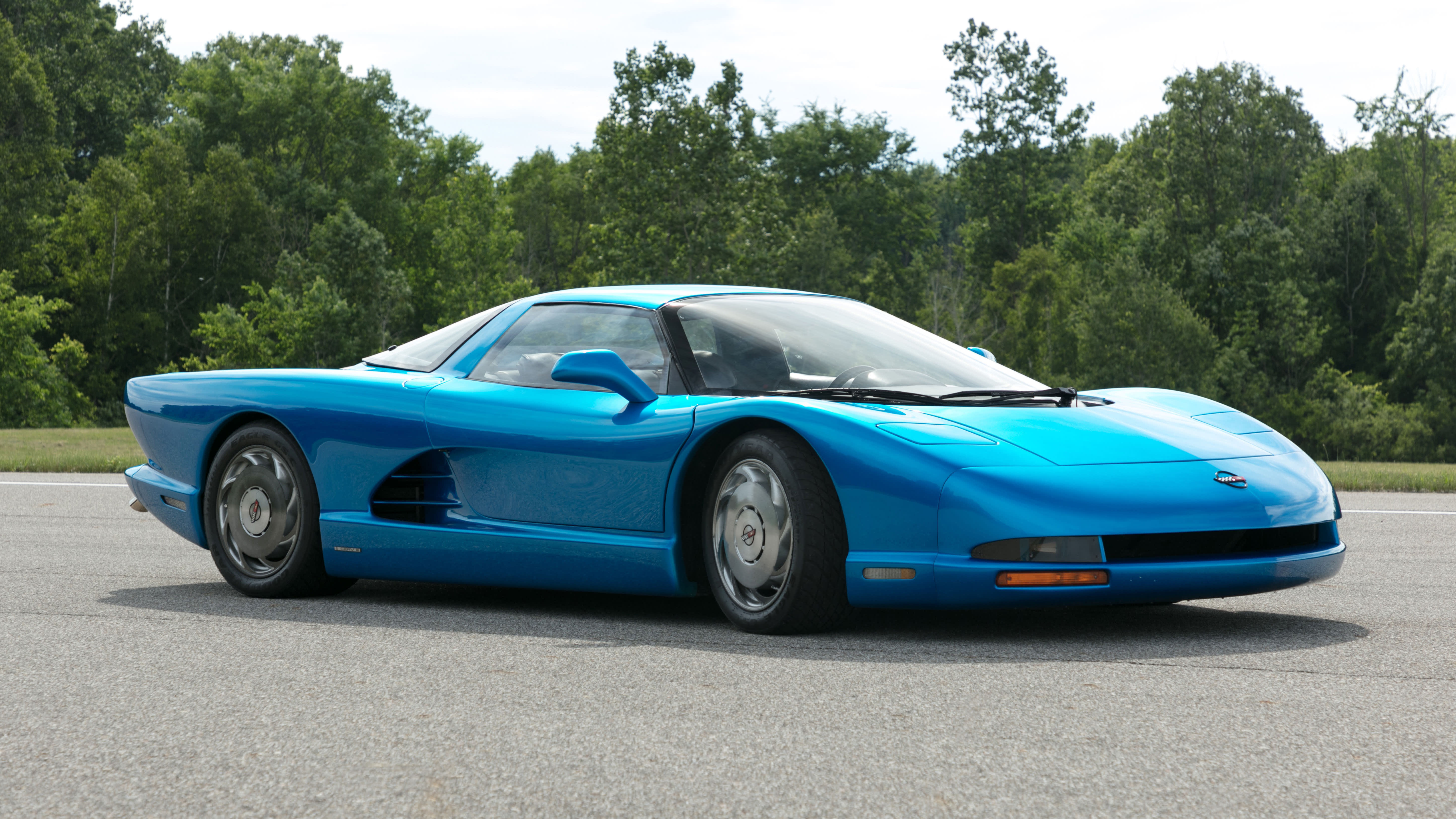
For a sports car that has been front-engine and rear-drive for over 60 years, it can seem a bit surprising that the C8 Chevy Corvette is switching to a mid-engine layout. But besides the potential performance benefits, Chevy has a long history of experimenting with high-performance mid-engine sports cars. With the help of archival photos and information from GM Heritage Center, we’re able to show you several of the cars that led to the new mid-engine Corvette.
CERV I
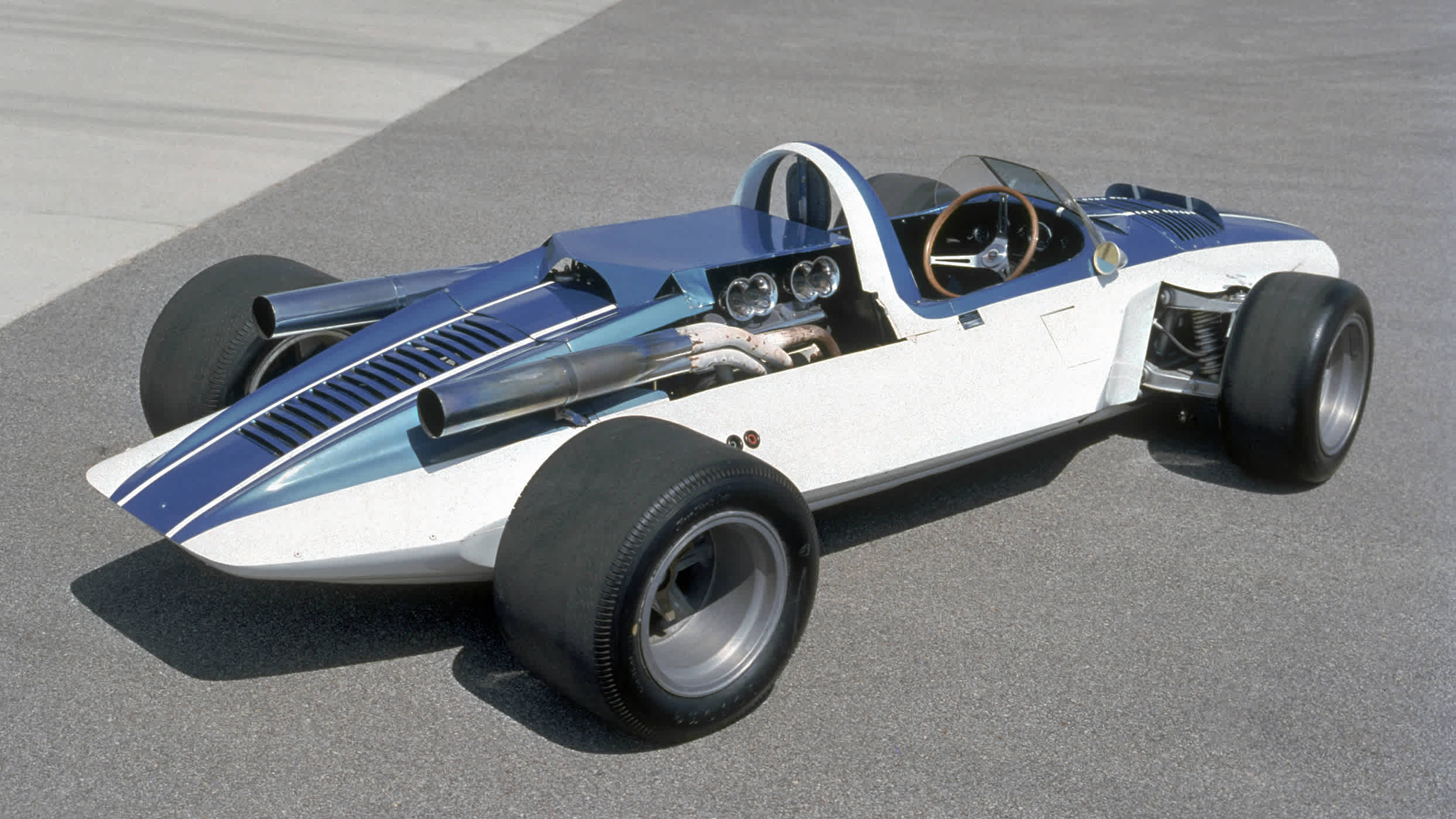
CERV I, the first part of which stands for Chevrolet Engineering Research Vehicle, is where Chevy’s mid-engine adventures began. It was shown in 1960 and was developed with Zora Arkus-Duntov at the helm, and according to Chevy, was really designed to learn about developing extremely high-performance cars that will experience high stresses and potentially unusual reactions compared with normal cars. It had thoroughly impressive performance thanks to a 350-horsepower all-aluminum fuel-injected 283-cubic inch V8 mounted in the middle. The whole car weighed only 1,600 pounds. Its top speed was a whopping 206 mph. Besides fiberglass bodywork, a V8 and a four-speed manual, there wasn’t much else shared with the Corvette. Suspension was fully independent with coil springs at all four corners, unlike the transverse-leaf layout that Corvettes new and old have used for the rear. It also featured inboard rear brakes, a quick-change rear differential for playing with different gear ratios, and dual fuel cells for ideal weight distribution.
CERV II
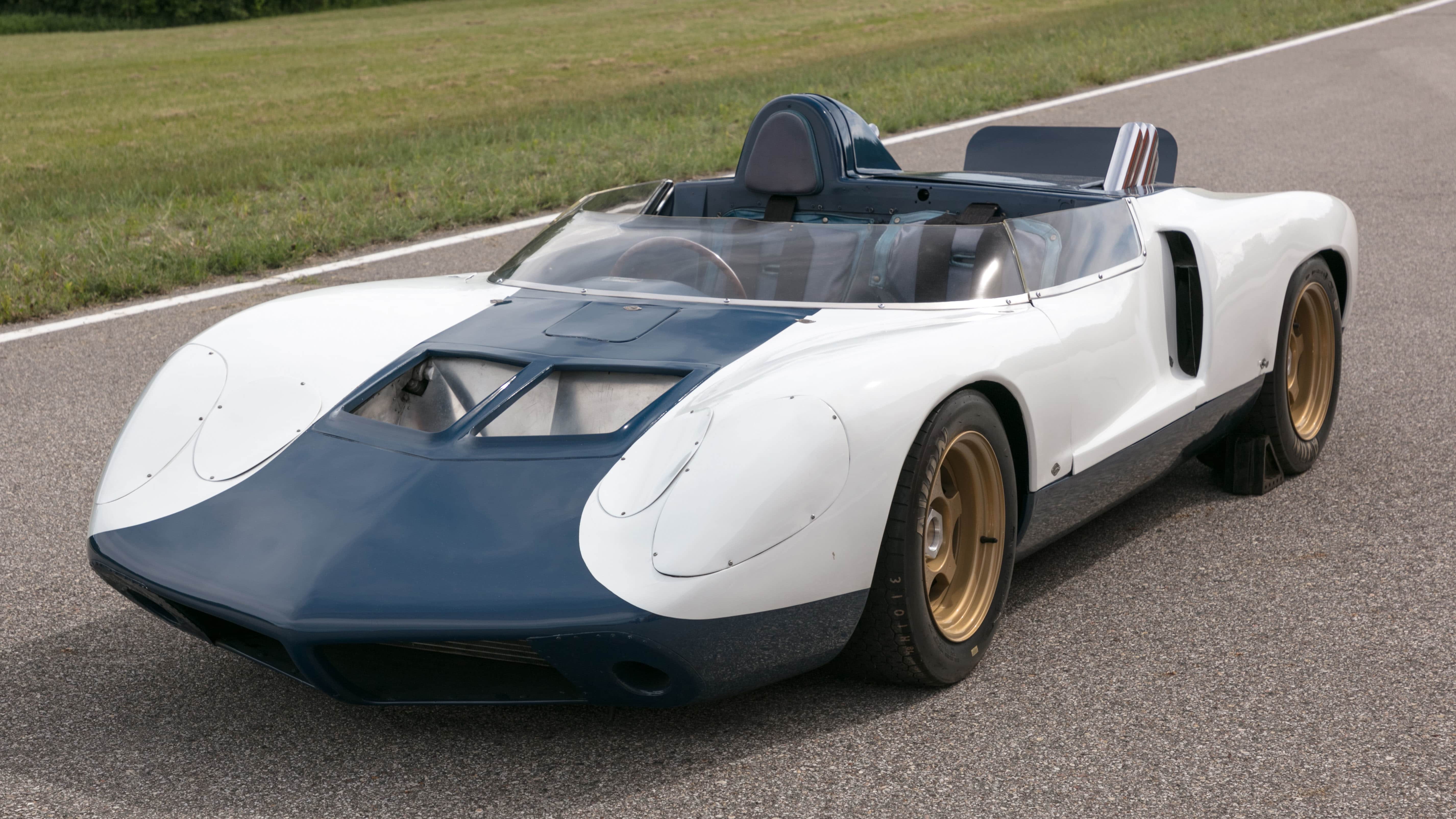
The follow-up to CERV I was CERV II in 1964. It lost the open-wheel race car design in favor of a more enclosed sports car body. At 1,848 pounds, it was also heavier than its predecessor. Some of that was probably due to the extra body work, and some of it was probably because of the drivetrain. Instead of the 283-cubic-inch V8, Chevy switched to a big 427-cubic-inch unit. And instead of rear drive, and unlike any Corvette, the CERV II had full-time all-wheel drive. This was made possible by having power sent out of both ends of the engine (a bit like in the Ferrari FF/GTC4 Lusso). Both ends got a two-speed Powerglide automatic to keep speeds roughly the same to both sets of wheels. Chevy noted that with a very short gear set, the car could hit 60 mph in just 2.8 seconds, though it would also only hit 115 mph. With a longer set of gears that allowed a top speed of over 200 mph, the CERV II could still hit 60 mph in a quick 4 seconds.
Astro II
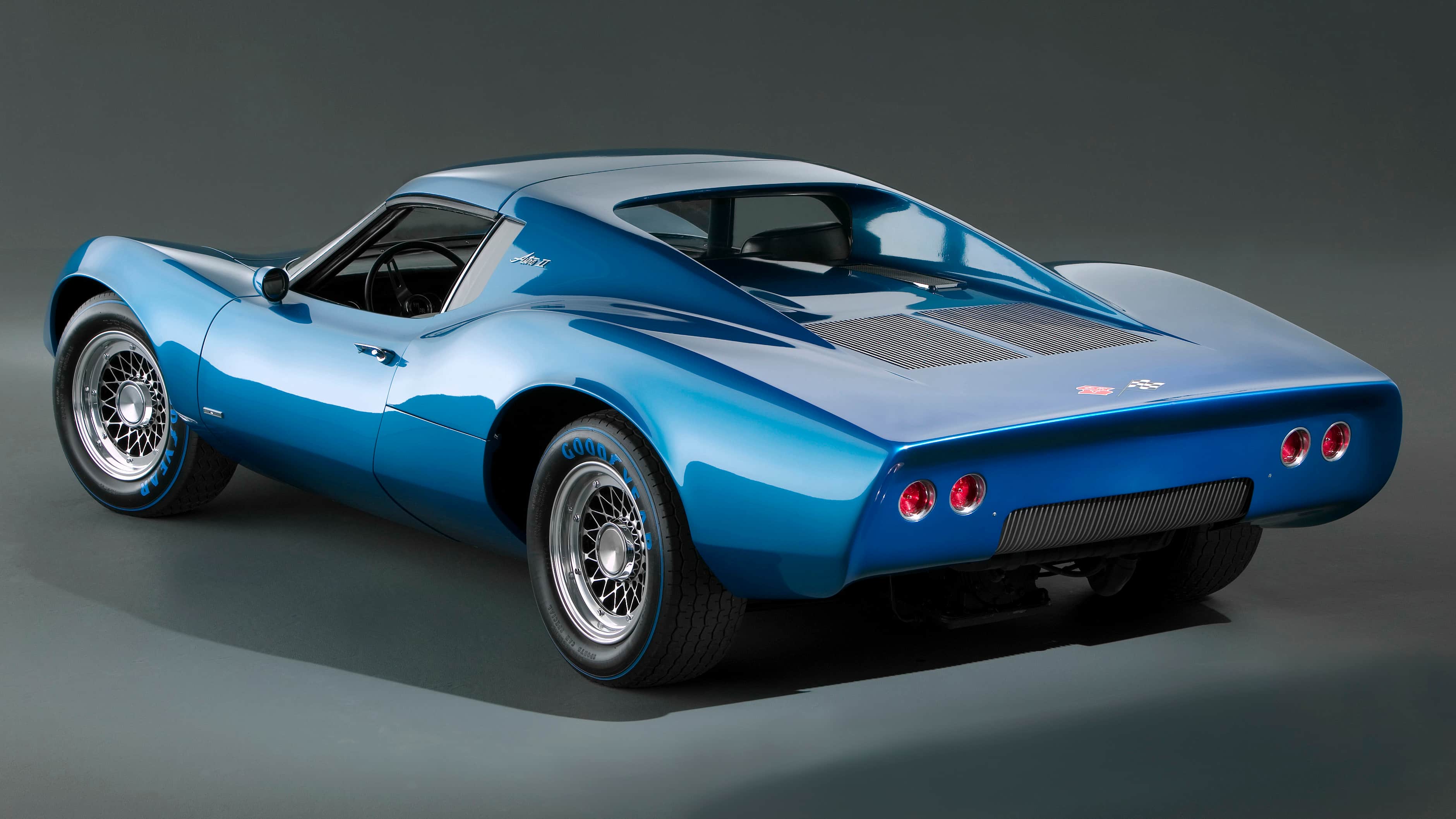
The next major mid-engine concepts from Chevy were the Astro models. The second version of the Astro shown in 1968 was the closest to what could have been a Corvette, since the first model used an air-cooled single-overhead-cam six-cylinder engine. The Astro II, shown above, got a more Corvette-like water-cooled V8. It also had the most Corvette-like chassis, using the same suspension down to the transverse leaf-spring. Chevy highlighted that the car had plenty of cargo space thanks to keeping the radiator and coolant lines in the back of the car, freeing up the front for luggage. There was also a cargo area behind the passengers that was accessible by lifting the engine cover.
Reynolds Aluminum Chevy Corvette
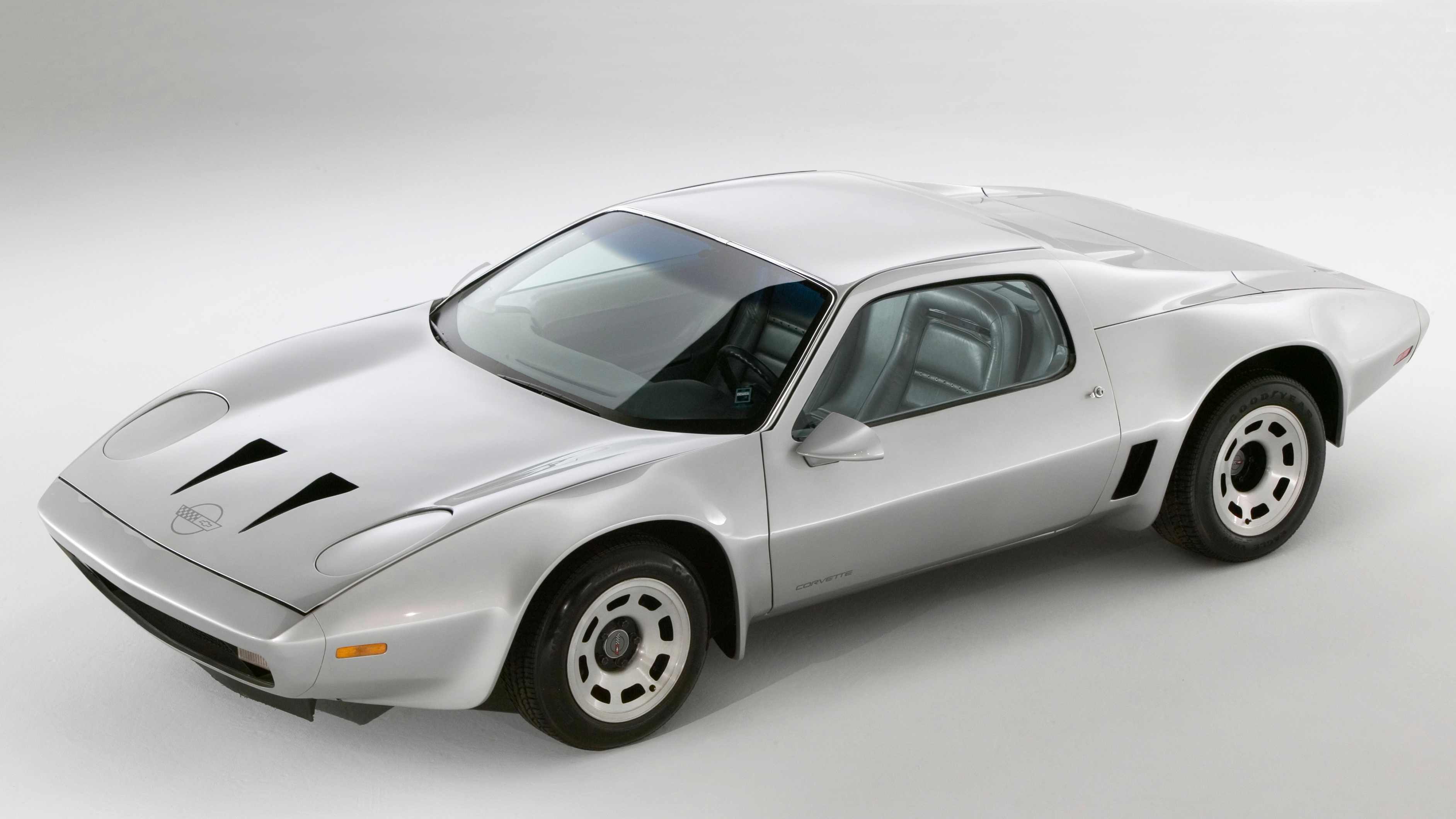
In 1972, we saw a mid-engine concept that actually used the Corvette name. And of course it was powered by a V8 and rear drive. But unlike actual Corvettes, the whole car was built from aluminum with help from Reynolds Metals Company. It used a monocoque chassis, and Chevy noted that it was designed in such a way that it could easily be made from steel as well. As such, the aluminum panels were pretty thick, especially since only one alloy of aluminum was used, rather than using variations for different purposes. Apparently this was because automotive recyclers would be willing to pay more for a hypothetical production car made of one type of metal. Somehow, we doubt many Corvette buyers were really worried about whether they would get decent scrap money for their cars.
XP-882 and Aerovette
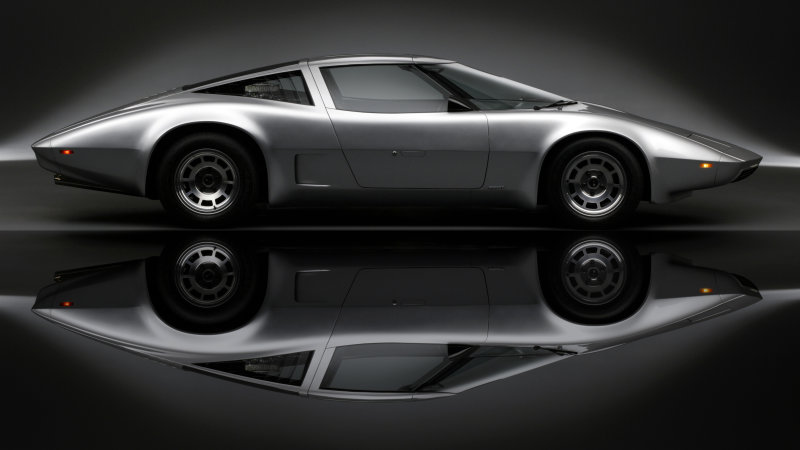
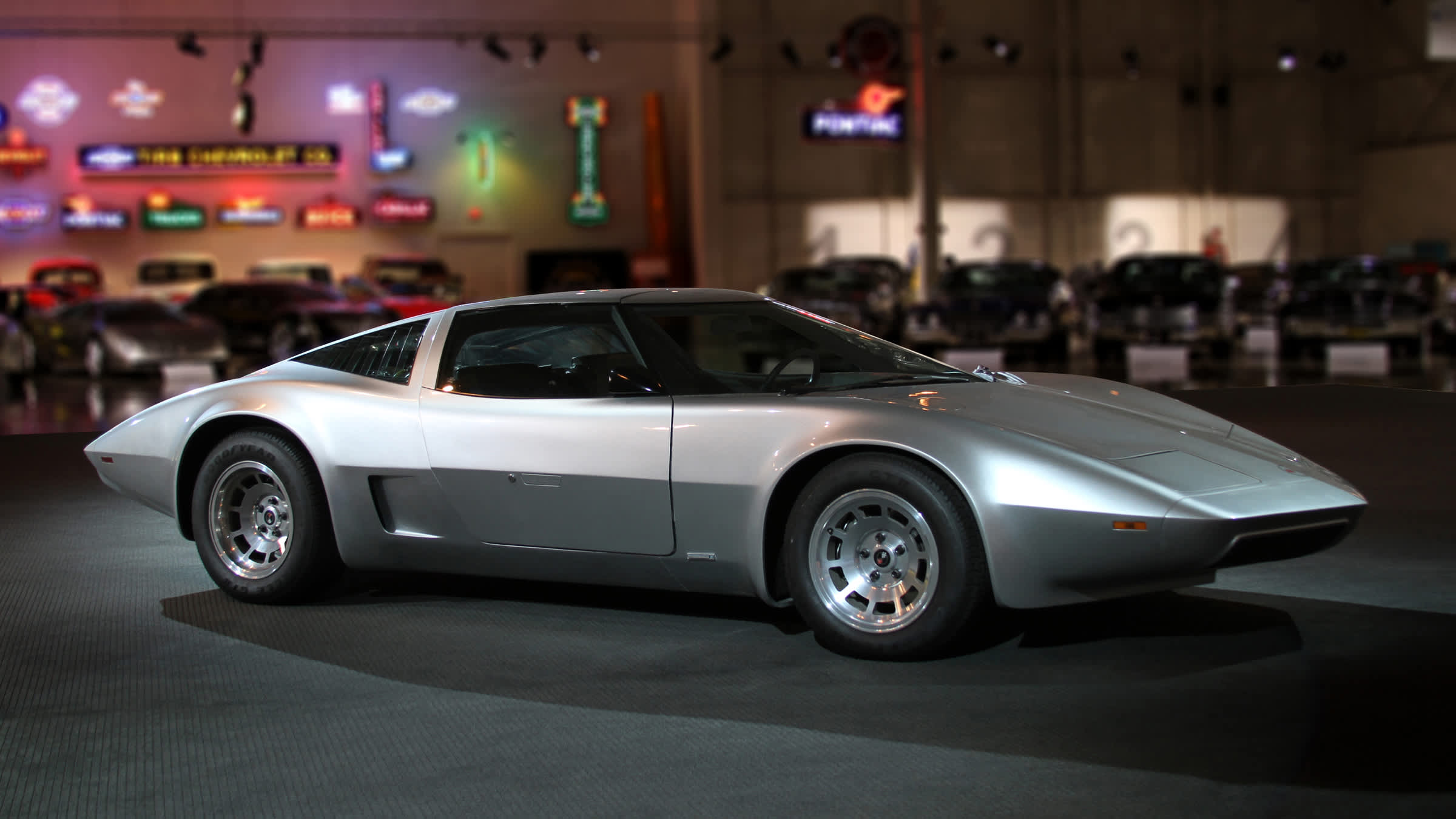
In the mid-’70s, General Motors began playing with rotary engines and rolled out the four-rotor XP-882 and the two-rotor XP-897 concepts. Both of which were sleek sports cars with mid-mounted engines. But GM quickly abandoned rotary engine development. The XP-882 got something of an update, though, in the form of the Aerovette, once again applying the Corvette name. The styling was tweaked and the rotary was switched out for a traditional V8, this one displacing 400 cubic inches and revving to an impressive 7,000-rpm redline. Interestingly, it featured a three-speed automatic transmission, and unlike the Astro II, it did stuff its cooling components up in the front. It also lost the Corvette’s transverse-leaf-spring rear suspension. It also had some wild show-car features such as folding gull-wing doors and digital instruments and radio displays.
Corvette Indy
The next big mid-engine Chevy concept came in 1986. It was called the Corvette Indy, and its name came from its engine. It used a tiny twin-turbocharged 2.65-liter double-overhead-cam four-valve-per-cylinder V8 taken from a period Indy racing car. It was extremely high-tech, as it also included all-wheel drive, four-wheel steering, ABS, traction control, an adaptive hydraulic suspension and even throttle-by-wire. The futuristic body was ultra-streamlined, and exterior mirrors were eschewed for a rear camera hooked up to a CRT screen. Two additional CRT screens provided engine information and navigation.
CERV III
We conclude our tour of mid-engine Chevy concepts with the CERV III. It was developed by Chevrolet-Pontiac-Canada, and it sounds very similar to the Corvette Indy. It’s mid-engined with a twin-turbo V8, ABS, traction control, four-wheel steering and adaptive suspension. But the engine wasn’t an Indy engine, rather a twin-cam 5.7-liter Corvette ZR1 engine, and it was mounted transversely. Total output was a whopping 650 horsepower and 655 pound-feet of torque. That engine was coupled to a three-speed automatic with a two-speed gearbox giving it effectively six gears. Chevy claimed it could hit 60 mph in 3.9 seconds on the way to a top speed of 225 mph. It also had a few high-tech tricks up its sleeve such as titanium springs and carbon brakes.
Chevy has of course had many other Corvette concepts, and GM has had the occasional car with unusual engine placement (i.e. Pontiac Fiero and Chevy Corvair), but the ones shared here highlight the company’s dream of a seriously high-performance mid-engine sports car. And now we get to see if those dreams have been properly realized in the C8 Corvette.
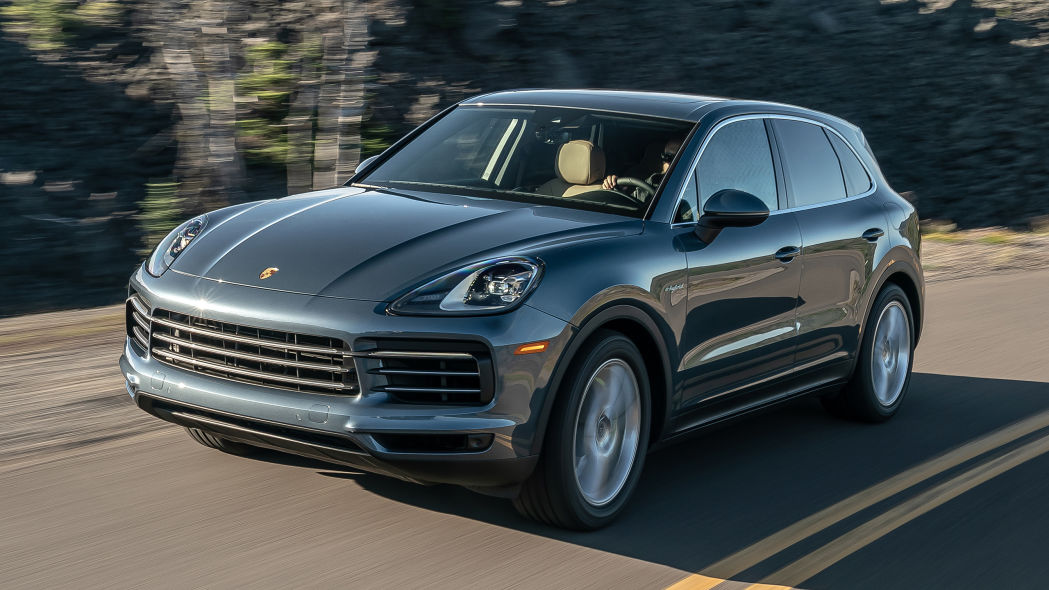
EUGENE, Ore. – The 2019 Porsche Cayenne E-Hybrid may have lost the S in its name, but its performance potential has actually been increased from its predecessor. The name change, or letter deletion, comes from Porsche’s decision to better define this plug-in hybrid’s space within Cayenne lineup, making it less of an outlier. It now highlights its performance advantage over the base model but acknowledges the supremacy of the non-hybrid S.
The 2019 E-Hybrid builds upon its plug-in predecessor by using the 3.0-liter single-turbo V6 from the base Cayenne, which makes 335 horsepower and 332 lb-ft of torque and, as in all Cayennes, pairs it with an eight-speed automatic transmission and all-wheel drive. In combination with a new, more powerful electric motor, the E-Hybrid makes 455 horsepower, on tap between 5,250 and 6,400 rpm, and 516 lb-ft of torque, which is available from an ultra-low 1,000 rpm to 3,750 revs.
Compared to the previous Cayenne S E-Hybrid plug-in that had 416 total system horsepower, the new E-Hybrid’s V6 is now turbocharged rather than supercharged, but the bigger change in the powertrain is a more robust electric motor. The electric motor makes 134 horsepower versus 95 previously. It’s fed by a 14.1-kWh battery pack, up from 10.8 kWh, yet the pack is no larger and tucks under the cargo floor.
The E-Hybrid actually surpasses the output of the Cayenne S, which uses a different V6,but because it weighs 600 pounds more, the non-hybrid maintains its performance advantage. That said, the actual performance disadvantage is minor. The E-Hybrid needs 4.7 seconds to sprint from zero to 60 mph (using launch control, part of the standard Sport Chrono package), a tenth slower than the Cayenne S with Sport Chrono. The S is also a tenth faster in the quarter, at 13.2 seconds. And the S’s top speed (164 mph) also bests the E-Hybrid’s 157. The E-Hybrid is well ahead of the standard model, however, which reaches 60 mph in 5.6 seconds using Launch Control, needs 14.2 seconds to complete the quarter-mile, and tops out at 152 mph.
There’s no word yet from the EPA on the E-Hybrid’s EV range, although when we fired up the car with a fully charged battery, the in-dash readout said there were 25 miles of EV range available, so that gives you a ballpark idea. The previous model was EPA rated at 14 miles. Recharging via the standard 3.6-kW unit using a 220-volt source should take around six hours, while the $840 optional 7.2-kW charger cuts that time to between two and three hours.
Unusual for a hybrid, the default driving mode for the Cayenne is full electric, here called E-Power, although the V6 will fire up if you push through the detent in the accelerator travel – necessary for anything more than gentle acceleration. To help identify that point, there’s a circular readout inset into the speedometer showing how much accelerator travel you have before you awaken the gas engine.
Curiously, E-Power mode has its own launch-control feature: Hold the brake pedal with your left foot and the accelerator with your right, keeping it just before the detent, for maximum electric acceleration. It sounds fun, but it’s hard to hold the accelerator shy of the detent, and maximum thrust is far from Ludicrous Mode. The Cayenne can, however, drive solely on battery power at speeds up to 83 mph, given sufficient battery charge and judicious application of the go pedal. When electric motoring at much lower speeds – under 20 mph or so – the E-Hybrid broadcasts a strange, sci-fi sound to alert pedestrians to its presence, although it’s not really audible inside the cabin.
As in other Sport-Chrono-equipped Porsches, a dial on the steering wheel provides easy access to the main drive modes, which besides E-Power are Hybrid Auto, Sport, and Sport Plus. Two sub-modes, E-Hold and E-Charge, also are available within Hybrid Auto but they’re under the Hybrid menu in the PCM screen and therefore less readily accessible. Hybrid Auto seeks “overall efficiency,” including by factoring in the distance to the destination if one is set in the navigation system. Within Hybrid Auto, the driver can more actively control the proceedings by selecting E-Hold to preserve battery charge for later, or E-Charge to more quickly replenish the battery using the engine.
What’s most impressive about the hybrid mode is how utterly seamless it is. The Cayenne E-Hybrid’s analog tachometer is the sole indicator that the engine has switched off – which it often will do even at highway speeds when the driver lifts off the accelerator – or when it fires back up. The V6’s largely silent operation is also a factor, but the smoothness of the transitions is remarkable nonetheless. Pull away from a stop and accelerator response is linear, the motor bolstering low-speed response and masking any turbo lag.
The Cayenne E-Hybrid’s Sport and Sport Plus modes both keep the engine running at all times. Sport uses the engine to maintain a minimum of 30 percent battery charge to ensure there’s electric boost when summoned. Sport Plus more aggressively recharges the batteries to 30 percent, and features more aggressive transmission and suspension programming. Pushing the button at the center of the mode dial instantly activates a 20-second boost mode and drops the transmission into a lower gear. A visual countdown pops up in the instrument cluster to let you know when the extra juice will expire – but you can always hit the button again to restart the party.
The cars we drove were equipped with Power Steering Plus, as most E-Hybrids will be. (The feature is bundled with the Premium Package or with the available four-wheel steering, and is also a standalone option.) It offers lower efforts at parking-lot speeds but doesn’t affect steering effort at higher speeds, and neither do the various modes. No matter: Effort levels are pleasant, and the Cayenne’s crisp steering is one of its best dynamic qualities.
Optional ($3,590) Porsche Dynamic Chassis Control – i.e., active anti-roll bars – was on one of the two examples we drove, and it all but eliminates body roll. Both E-Hybrids had the optional air springs ($2,170), and PASM adaptive dampers are standard. The suspension provides three levels of firmness, and even the softest setting felt tied-down as the E-Hybrid confidently coursed through the fast sweepers of our drive route in the mountains of southwest Oregon. The firmest setting faithfully transmits the pavement surface, but Oregon’s smooth roads didn’t provide a meaningful test of ride harshness. We can report that the firmest setting effectively squashed squat and dive that were somewhat evident although hardly bothersome in the softest setting. Overall the Cayenne E-Hybrid does a great job of masking its heft, although it’s hard not to think the Cayenne S would be even more athletic.
The E-Hybrids we drove were equipped with the standard brakes, with cast-iron rotors. We found them a bit tricky to modulate as they blend friction and regenerative braking. Two optional brake-system upgrades are available: Porsche Surface Coated Brakes (PSCB), in which the iron rotors get a special coating that minimizes brake dust and extends the life of the rotors, and Porsche’s ceramic composite rotors (PCCB), which save a few pounds and better resist fade. The hybrid’s calipers are acid green, as is the outline of the exterior nameplates. But buyers can opt for gray calipers or yellow ones if ceramic composite rotors are ordered.
The slightly odd brake feel is only noticeable during gentle stops and is one of the only areas (beyond the EV operation) in which the E-Hybrid’s otherness is evident. Porsche has really succeeded in making this model seem not like an oddball or an outlier. For instance, the E-Hybrid is rated to tow the same 7,716 pounds as other Cayennes. It can also be equipped with a new trailering assistant that can reverse for you when hitching up.
Driver’s will be able to remotely check battery charge status and pre-condition the cabin through an app, but the tech that drivers will most regularly interact with is the high-res 12.3-inch central touchscreen and the new touch-sensitive controls on the center console. The former is highly configurable, offering as many as six different information pods, and can be manipulated via touch inputs or by using the small rotary controller. The center console buttons offer haptic feedback, and there are also welcome physical controls for interior temperature and fan speed, and a volume knob. The whole business is fairly user-friendly, as these things go, and would be more so once an owner sets the screen displays to his or her liking.
There are no bargains to be found at the Porsche store, but the Cayenne hybrid is now $3,000 less than a Cayenne S – and the savings are even greater when you factor in the E-Hybrid’s additional standard equipment, such as the Sport Chrono package. The idea now is that price hierarchy and performance hierarchy are aligned. Thus, the Cayenne E-Hybrid is a major step up on performance compared to the base Cayenne and nearly matching the S, while offering better fuel economy than either.
The question will be whether buyers of an $80,000-plus Porsche SUV care enough about a few extra mpg or the still-modest EV range, or whether they’d rather just have the S. One thing is for sure: Even in its heaviest form and packing a hybrid powertrain, this Cayenne drives very much like a Porsche.
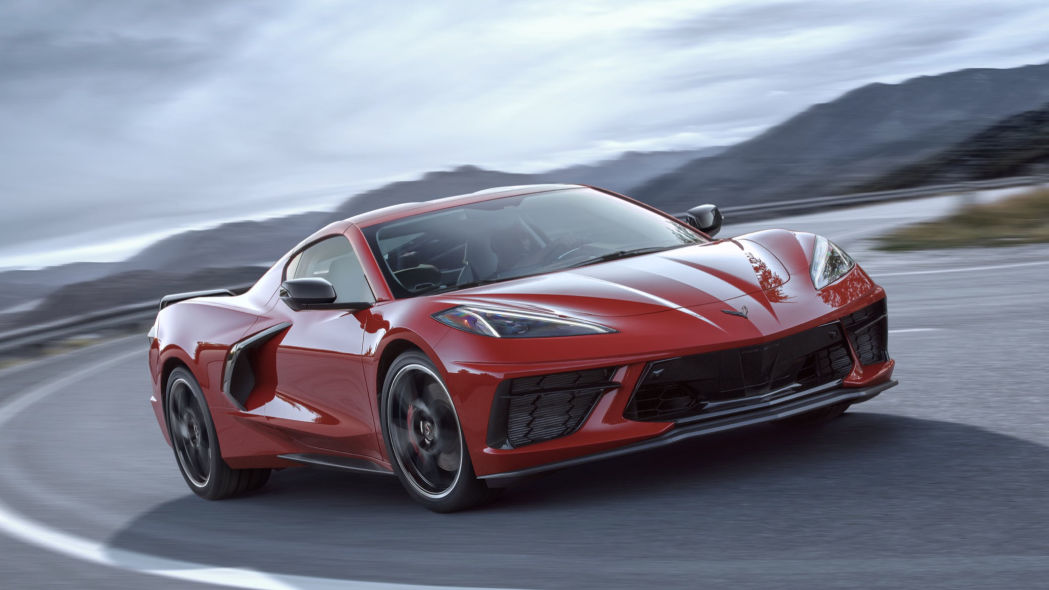
TUSTIN, Calif. — When the new Ford GT debuted a few years back, it was a true surprise, one of the last real ones we can remember. By contrast, few things in the automotive landscape have been as long-awaited as the mid-engine Chevy Corvette. Chevy has made no secret of the car, parading a camouflaged prototype through the streets of New York City months ago with today’s date stamped along the side. After decades of concepts, leaks, teasers, illustrations, magazine covers, fever dreams and rampant speculation by anyone and everyone, the C8 is truly and finally here, introduced by astronauts Mae Jemison and Scott Kelly on Thursday night in a massive aircraft hangar, ushering in a new era for America’s sports car.
The 2020 Chevy Corvette gets a 6.2-liter LT2 naturally aspirated V8 engine that makes 495 horsepower and 470 pound-feet of torque with the optional exhaust. Without the sport exhaust it makes 490 horsepower and 465 pound-feet of torque. All C8s will have a dry-sump oil system, and the internals remain largely the same as the LT1. Redline stays at 6,600 rpm for this engine, too. The motor is visible through a 3.2-millimeter glass pane, and it’s a real gem to look at. An eight-speed dual-clutch Tremec transmission will be swapping the cogs, and there is no manual option. Chevy isn’t giving an exact acceleration time right now, but it says the 0-60 mph run will be under 3 seconds.
All of this, plus GM’s Mark Reuss says the C8 will start under $60,000. Bravo, Chevrolet.
Chevy is giving all C8 Corvettes a coilover suspension, so no more leafs. A Z51 package adds an adjustable suspension — you can change the stiffness and the ride height. Additionally, GM is introducing Magnetic Ride Control 4.0 with the C8 as an option. The Z51 package also adds a splitter and large rear spoiler, giving the C8 400 pounds of downforce.
The Z51’s added aero also aids in making the mid-engine Corvette even more aggressive-looking than in standard form. It looks a lot like we expected it to, and that’s a good thing. There are plenty of design elements that remind us of the Corvette before this, even though the car is wildly different in nature. It’ll be up to the Corvette buying public to make the ultimate judgment on whether GM got the design right.
Most important of all is the C8’s new structure. To keep the price in check, Chevy didn’t use a supercar-like carbon fiber tub. Everything is made of aluminum, except for two carbon pieces for the rear bumper beam and an underbody panel running along the bottom of the center tunnel. It’s heavier than the C7, though — Chevy is quoting a dry weight of 3,366 pounds.
Buyers will have a few trim levels to choose from initially. The FE1 trim level is the base car, which will be the one that starts under $60,000. Then, the FE3 is the next level of performance, which includes the Z51 package. This trim has an electronic limited slip differential, enhanced cooling, bigger brakes and summer tires (FE1 has all-season rubber). The summer tires are the popular Michelin Pilot Sport 4S, which Chevy estimates will pull 1.03-1.05 g on the skid pad. Opting for the Michelin Pilot Sport all-season tires won’t hurt, though, as Chevy says they should be capable of 1.00-g handling. To get the magnetic dampers, you’ll need to opt for the full-on FE4 kit.
There are some great convenience features that Chevy thought of, too. A GPS-enabled nose-lift feature can be programmed to automatically lift in certain locations, like your driveway. Chevy also claims that the trunk has enough room for two whole sets of golf clubs. The “frunk” is able to handle a TSA-approved carry-on bag, plus a laptop bag. We’re glad GM decided to make use of the front area for cargo. The removable roof panels will fit in the trunk, too.
Without the long hood out front, Chevy moved the cockpit forward by 16.5 inches compared to the C7. And GM is going to make a right-hand drive version of the Corvette, so folks in those markets will be able to enjoy the new mid-engine car, too.
The C8’s interior is a radical departure from the current car’s cockpit. The C7 was already fairly driver-oriented, but the new car takes things further with a long row of buttons separating the passenger seat from the center console. The whole thing is tilted down toward the driver, and the low dash should provide excellent forward visibility. While the C7 used a few analog gauges alongside the digital display, the C8’s instrument cluster is all digital. The floating 12-inch infotainment screen looks handsome, but the hidden storage compartment behind the screen itself appears to be gone. The same goes for the shifter, with a traditional lever replaced by a set of buttons. A pair of large shift paddles are mounted to the back of the square steering wheel.
There are some great luxury features on the interior that Chevy included for the C8. You’ll find leather and real metal used judiciously. Carbon fiber and aluminum trim is available, along with six different interior color options. You can choose from Jet Black, Sky Cool Gray, Adrenaline Red, Natural/ Natural Dipped, Two-Tone Blue and Morello Red. On top of that, Chevy has six different seatbelt colors, including Black, Blue, Natural, Torch Red, Yellow and Orange. Yes, the inside can be a true rainbow if you’d like it to be.
Three seat options of varying aggression are offered. The GT1 is more of a comfortable grand touring-style seat, and the Competition Sport seat is designed for the track-day enthusiast. Splitting the difference is the GT2, designed as a bit of a hybrid. More exterior color options than before will be available for the C8, with 12 different shades in total.
Chevy also integrated a new electrical architecture in this car, allowing for a few benefits. For one, Chevy will be able to push out over-the-air updates to all C8s. It’s designed to make signals travel faster throughout the car, plus enable them to use the all-new high-resolution screens. Other neat electric additions include wireless phone charging, one-touch Bluetooth pairing via NFC, and the next-generation Performance Data Recorder.
The idea of a mid-engine Corvette is far from new. There have been concepts and prototypes over the decades, the most famous being the third Chevrolet Engineering Research Vehicle, better known as the Corvette CERV III. This sleek mid-engine coupe debuted in the middle of the C4 generation and featured things like four-wheel drive, four-wheel steering and a twin-turbocharged version of the LT5 from the original Corvette ZR1.
GM says the C8 will go into production in Bowling Green in late 2019, with additional pricing and details to be revealed.
More details are coming, but we’ll still have to wait a bit before we can get behind the wheel. The C7 is already one of the greatest sports cars of its generation. We’re hoping the same can be said of the new C8.





 WAGON RIDER